
Publications
Show filterHide the filter


Select by:
(2026). My child is ready to start school: why do parents hold this belief? International Journal of Early Years Education, 1–21.
Chichinina, E., Oshchepkova, E., Tarasova, K., Veresov, N., Shatskaya, A.
https://www.tandfonline.com/doi/full/10.1080/09669760.2026.2645337
(2026). The Structure Paradox: How Parental Belief About Structured Life Shapes Children’s Play Engagement. Education Sciences, 16(7),1149.
Gavrilova, M., Dvorskaya, E., Veraksa, N., Sukhikh, V.
https://www.mdpi.com/2227-7102/16/7/1149
(2026). Validation of the Parental Playfulness Questionnaire in a Russian sample: development of a unidimensional 8-item short form (PPQ-8) and its association with parental stress. Frontiers in Psychology, 17, 1886533.
Sukhikh, V., Gavrilova, M.
https://www.frontiersin.org/journals/psychology/articles/10.3389/fpsyg.2026.1886533/full
(2026). Physical Fitness and Executive Functions in Early Childhood: A Systematic Review of Recent Evidence. Complementary Therapies in Medicine, 96, 103321.
Lakichevich N., Manojlovic M., Chichinina, E., Chursina, A., Tarasova, K., Thomas, E., Zhong, Yu., Bianco, A., Drid P.
https://www.sciencedirect.com/science/article/pii/S096522992600004X?via%3Dihub
(2026). Digital play addiction tendency in 5- to 6-year-old children: the role of parental mediation strategies in Russia and Türkiye. Frontiers in Psychology, 17, 1898639.
Almazova, O., Isikoglu, N., Cokorilo, N., Drid P.
https://www.frontiersin.org/journals/psychology/articles/10.3389/fpsyg.2026.1898639/full
(2026). Associations Between Digital Activity and Well-Being at School Among Russian and Serbian Adolescents. European Journal of Psychology Open, 2.
Rudnova, N.A., Kornienko, D.S., Veraksa, A., Zanini, D., Manojlovic M., Drid P.
(2026). Observed teacher–child interaction quality as a predictor of motor competence in preschoolers: A sex-differentiated analysis. Human Movement Science, 107, 103490.
Chichinina, E., Bukhalenkova, D., Almazova, O., Lakichevich N., Surilova, I.
https://pubmed.ncbi.nlm.nih.gov/42229248/
(2026). The relationships between emotion comprehension and language development (verbal fluency and narratives) in preschool children. Journal of Cultural Cognitive Science, 10, 113–127.
Veraksa, A., Oshchepkova, E., Chursina, A., Derakhshan A.
(2026). Extracurricular activities as a moderator of the association between screen time and executive functions in children. Frontiers in Psychology, 17, 1843739.
Chichinina, E., Yakushina, A., Rudnova, N.A., Pashenko A., Drid P., ,
(2025). Educational tools to introduce the concept of magnitudes in preschoolers: comparative effectiveness. Culture and Education, 37(3), 799-821.
Veraksa, A., Sidneva, A., Aslanova, M., Plotnikova, V., Solovieva Yu.
https://journals.sagepub.com/doi/10.1177/11356405251363412
(2025). Language development and quality of classroom interactions in kindergarten among five-to-six-year-old children. Culture and Education, 37(3), 761-780.
Oshchepkova, E., Bukhalenkova, D., Veraksa, A., Yakupova, V.
https://journals.sagepub.com/doi/10.1177/11356405251360155
(2025). The contribution of executive functions and emotion comprehension skills to the development of pragmatic competence in 5–8-year-old children. Frontiers in Psychology, 16:1659576.
Oshchepkova, E., Shatskaya, A., Tarasova, K.
https://www.frontiersin.org/journals/psychology/articles/10.3389/fpsyg.2025.1659576/full
(2025). Parental Attitudes and Children’s Language Development: A Cross-Cultural Evaluation of the Early Parenting Attitudes Questionnaire. Collabra: Psychology, 11(1), 130882.
Allegretta S., Gavrilova, M., Kartushina, N., Mayor J., Roch M., Kunst J.R.
https://online.ucpress.edu/collabra/article/11/1/130882/207815/Parental-Attitudes-and-Children-s-Language
(2025). Socio-Demographic Characteristics: Barriers or Facilitators of Children’s Cognitive Development? Findings From a Longitudinal Pediatric Analysis. International Journal of Social Psychiatry, 72(3), 701-713.
Charkhabi M., Gavrilova, M., Tarasova, K.
https://journals.sagepub.com/doi/10.1177/00207640251381852
(2025). The Interplay of Non-Verbal Intelligence and Cognitive Functions in Understanding Emotions in Preschool Children. Psychology Research and Behavior Management, 18, 1531-1544
Charkhabi M., Gavrilova, M., Tarasova, K., Chichinina, E., Dutheil F.
https://www.dovepress.com/the-interplay-of-non-verbal-intelligence-and-cognitive-functions-in-un-peer-reviewed-fulltext-article-PRBM
(2025). Screen time exposure and executive functions in preschool children. Scientific Reports, 15:1839.
Lakichevich N., Manojlovic M., Chichinina, E., Drid P., Zinchenko, Yu.
https://www.nature.com/articles/s41598-024-79290-6
(2025). Thinking, Feeling, and Moving in Kindergarten Children: How Motor Competence Shapes Executive Function Skills and Emotion Comprehension in Girls. Children, 12(10), 1381.
Chichinina, E., Veraksa, A., Almazova, O., Pagani L.S.
https://www.mdpi.com/2227-9067/12/10/1381
(2025). Non-therapeutic play to overcome negative emotional symptoms and improve emotional intelligence in children aged 3–7: a systematic review. Frontiers in Psychology, 16, 1475387.
Veraksa, A., Plotnikova, V., Sukhikh, V., Kornienko, D.S., Rudnova, N.A.
https://www.frontiersin.org/journals/psychology/articles/10.3389/fpsyg.2025.1475387/full
(2025). Addressing Emotional and Behavioral Symptoms in Young Children: The Potential of Non-Therapeutic Play and Art. Children, 12(5), 551.
Veraksa, A., Plotnikova, V., Kornienko, D.S., Rudnova, N.A., Gavrilova, M.
https://www.mdpi.com/2227-9067/12/5/551
(2025). Football training vs. martial arts training: How are they related to executive function skills in 5–6-year-old boys? Frontiers in Psychology, 16, 1668266.
Yakushina, A., Rudnova, N.A., , Pashenko A., Chichinina, E.
https://www.frontiersin.org/journals/psychology/articles/10.3389/fpsyg.2025.1668266/full
(2025). :Internal migrant preschoolers: life changes serve better emotion understanding? Frontiers in Psychology, 16, 1628828.
Gavrilova, M., Karimova A. I., Solopova O. V., Veraksa, A., Yakushina, A.
https://www.frontiersin.org/journals/psychology/articles/10.3389/fpsyg.2025.1628828/full
(2025). The Influence of Art Activities on the Creativity of Junior Schoolchildren. Integration of Education, 29(1), 186–199.
Bayanova, L., Bukhalenkova, D., Dolgikh, A., Chichinina, E., , ,
https://edumag.mrsu.ru/index.php/ru/articles/138-25-1/1232-10-15507-1991-9468-029-202501-11
(2024). Comparison of executive functions in Russian and Japanese preschoolers. Frontiers in Psychology, 15, 1444564.
Veraksa, A., Hasegawa M., Bukhalenkova, D., Almazova, O., Aslanova, M., Matsumoto Е.
https://www.frontiersin.org/journals/psychology/articles/10.3389/fpsyg.2024.1444564/full
(2024). Preschoolers’ executive function: effect of the duration of preschool attendance and quality of teacher-child interactions. Frontiers in Education, 9, 1421037.
Gavrilova, M., Karimova A. I., Solopova O. V., Veraksa, A., Yakushina, A.
https://www.frontiersin.org/journals/education/articles/10.3389/feduc.2024.1421037/full
(2024). Digital Devices in Life of Modern Preschoolers. The Art and Science of Television, 20(1), 171–215.
Veraksa, A., Bukhalenkova, D., Chichinina, E., Kalimullin, Ay., Oshchepkova, E., Shatskaya, A., Zinchenko, Yu.
https://tv-science.online/en/journals/20-1-tsifrovye-ustrojstva-v-zhizni-sovremennyh-doshkolnikov/#
(2024). La formación de la acción de medición a partir del contenido de un cuento mágico. CIENCIA ergo-sum, 32.
https://www.researchgate.net/publication/382897596_La_formacion_de_la_accion_de_medicion_a_partir_del_contenido_de_un_cuento_magico/link/66b2347a299c327096b57ce9/download?_tp=eyJjb250ZXh0Ijp7ImZpcnN0UGFnZSI6InB1YmxpY2F0aW9uIiwicGFnZSI6InB1YmxpY2F0aW9uIn19
(2023). The longitudinal influence of the level of executive function development on children’s transcriptional skills: a modern view of A. Luria’s ideas. Frontiers in Psychology. 14:1199683.
Oshchepkova, E., Shatskaya, A., Kovyazina, M.
https://www.frontiersin.org/journals/psychology/articles/10.3389/fpsyg.2023.1199683/full
(2023). Play to foster children’s executive function skills: exploring short-and long-term effects of digital and traditional types of play. International Journal of Early Childhood, 56(3), 687-709.
Veraksa, A., Veraksa, N., Sukhikh, V., Gavrilova, M., Plotnikova, V.
https://link.springer.com/article/10.1007/s13158-023-00377-8
(2023). Russian and indian preschool educators’ beliefs about play activities: a comprehensive study. Frontiers in Education, 1091562.
Veraksa, A., Veresov, N., Sukhikh, V., Gavrilova, M., Plotnikova, V.
https://www.frontiersin.org/articles/10.3389/feduc.2023.1091562/full
(2023). Russian version of brief2 teacher forms: Validation study in typically developing children aged 5 to 7 years old. Frontiers in Psychology, 14: 1260107.
Gavrilova, M., Aslanova, M., Tarasova, K., Zinchenko, Yu.
https://www.frontiersin.org/articles/10.3389/fpsyg.2023.1260107/full
(2022). Early Child Development in Play and Education: A Cultural-Historical Paradigm. Frontiers in Psychology, 13:968473
Veraksa, N., Samuelsson, I., Colliver, Ye.
(2022). The Relationship between Executive Functions and Dance Classes in Preschool Age Children. Education Science, 12, 788
Chichinina, E., Bukhalenkova, D., Tvardovskaya A., Semenov, Yu., Gavrilova, M., Almazova, O.
https://www.mdpi.com/2227-7102/12/11/788#
(2022). Effectiveness of Different Teaching Resources for Forming the Concept of Magnitude in Older Preschoolers with Varied Levels of Executive Functions. Psychology in Russia: State of the Art, 15(4)
Veraksa, A., Sidneva, A., Aslanova, M., Plotnikova, V.
http://psychologyinrussia.com/volumes/index.php?article=10732
(2022). Which play is better?: Different play types and development of executive functions in early childhood. International Journal of Early Years Education, 30 (3), 560-576.
Veraksa, A., Sukhikh, V., Veresov, N., Almazova, O.
(2022). What children’s number naming errors tell us about early understanding of multidigit numbers. Journal of Experimental Child Psychology, 224:105510.
Vasilieva, M., Laski, E., Veraksa, A., Bukhalenkova, D.
(2022). The Relationship Between Russian Kindergarteners’ Play and Executive Functions: Validating the Play Observed Behaviors Scale. Frontiers in psychology, 13:797531.
Veraksa, A., Bukhalenkova, D., Almazova, O., Sukhikh, V., Colliver, Ye.
(2022). Emotion Understanding in Bilingual Preschoolers. Behavioral Sciences, 12(4):115.
Bukhalenkova, D., Veraksa, A., Gavrilova, M., Kartushina, N.
https://www.mdpi.com/2076-328X/12/4/115/htm
(2022). Difference in Executive Functions Development Level between Two Groups: Preschool Children Who Took Extra Music Classes in Art Schools and Children Who Took Only General Music and Dance Classes Offered by Preschools. Education Sciences, 12(2), 119.
Bayanova, L., Chichinina, E., Veraksa, A., Almazova, O., Dolgikh, A.
https://www.mdpi.com/2227-7102/12/2/119/htm
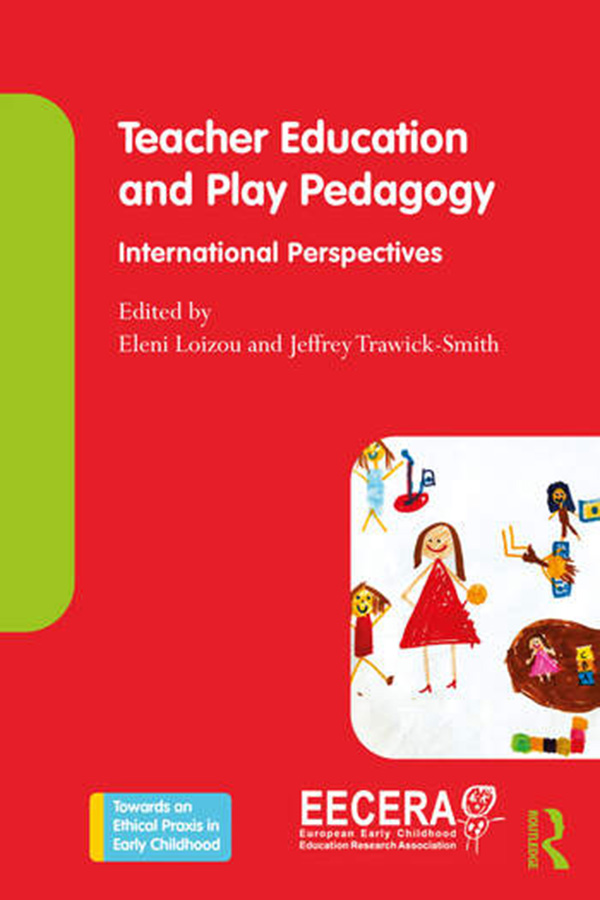
(2022). Teacher Education and Play Pedagogy: International Perspectives. ABINGDON: ROUTLEDGE JOURNALS, 226
et al.
Loizou, E., Trawick-Smith, J., Veraksa, A., Veraksa, N., Gavrilova, M., Bukhalenkova, D., Sukhikh, V.
(2022). Piaget and Vygotsky in XXI century. Discourse in early childhood education. Cham: Springer International Publishing AG, 206
et al.
Veraksa, A., Samuelsson, I.
(2021). Executive Functions’ Impact on Vocabulary and Verbal Fluency among Mono- and Bilingual Preschool-Aged Children. Psychology in Russia: State of the Art, 14(4), 66-78.
Kovyazina, M., Oshchepkova, E., Airapetyan Z., Ivanova, M., Dedukina, M., Gavrilova, M.
http://psychologyinrussia.com/volumes/index.php?article=9604
(2021). Associations between emotional scaffolding, classroom quality and dialectical thinking support in kindergarten. Cypriot Journal of Educational Sciences, 16(5), 2091-2099
Veraksa, N., Airapetyan Z., Krasheninnikov-Khait, E., Gavrilova, M.
https://un-pub.eu/ojs/index.php/cjes/article/view/6224
(2021). Russian and Indian Preschool Educators’ Beliefs about Distance Education for Preschoolers. Education Science, 11(12), 814
Veraksa, A., Singh, P., Gavrilova, M., Jain, N., Veraksa, N.
https://www.mdpi.com/2227-7102/11/12/814/htm
(2021). Intuitive Theories of Parenting and the Development of Emotion Understanding in Preschoolers. Education Sciences, 11(1), 15
Bukhalenkova, D., Gavrilova, M., Kartushina, N.
(2021). Leveraging measurement instruction to develop kindergartners’ numerical magnitude knowledge. Journal of Educational Psychology, 113(7), 1354-1369
Vasilieva, M., Laski, E., Veraksa, A., Bukhalenkova, D.
https://doi.apa.org/doiLanding?doi=10.1037%2Fedu0000653
(2021). Short- and Long-Term Effects of Passive and Active Screen Time on Young Children’s Phonological Memory. Frontiers in Education, 6.
Veraksa, N., Veraksa, A., Gavrilova, M., Bukhalenkova, D., Oshchepkova, E., Chursina, A.
(2021). Associations Between Executive Functions and Physical Fitness in Preschool Children. Frontiers in Psychology, 12.
Veraksa, A., Gavrilova, M., Yakupova, V., Musálek, M., Tvardovskaya A.
(2020). Studying executive functions in senior preschoolers. PsyCh Journal, 9(1), 144–146
Veraksa, A., Almazova, O., Bukhalenkova, D.
(2020). The relationship between play repertoire and inhibitory control in preschool children. European Journal of Contemporary Education, 9(2), 443–450
Veraksa, A., Gavrilova, M., Bukhalenkova, D., Yakupova, V.
https://eric.ed.gov/?id=EJ1262613
(2020). The relationship between executive functions and language production in 5–6-year-old children: Insights from working memory and storytelling. Behavioral Sciences, 10(2), 52.
Veraksa, A., Bukhalenkova, D., Kartushina, N., Oshchepkova, E.
(2020). Executive functions of preschoolers with different levels of cultural congruence. International Journal of Early Years Education, 1–12.
Bayanova, L., Popova, R., Veraksa, A., Bukhalenkova, D.
(2020). Executive functions and quality of classroom interactions in kindergarten among 5-6-year-old children. Frontiers in Psychology, 11.
Veraksa, N., Bukhalenkova, D., Almazova, O.
(2020). Associations between cognitive outcomes and emotion recognition among preschoolers. ARPHA Proceedings, 3, 2683-2693.v
Veraksa, N., Airapetyan Z., Gavrilova, M., Fominykh, A.
(2020). Assessing the effectiveness of differentiated instructional approaches for teaching math to preschoolers with different levels of executive functions. Education Sciences, 10(7), 181.
et al.
Veraksa, A., Veraksa, N., Aslanova, M., Bukhalenkova, D.
(2019). Does batman affect ef because he is benevolent or skilful? The effect of different pretend roles on pre-schoolers’ executive functions. Early Child Development and Care, 191(10), 1567-1576.
Veraksa, A., Colliver, Ye., Gavrilova, M., Bukhalenkova, D., Almazova, O., Veraksa, N.
(2018). Preschool classroom quality and children social-emotional development. The European Proceedings of Social & Behavioural Sciences, Volume XLIX. — Vol. 49. 2018, 714–723.
Martynenko, M., Veraksa, A., Bukhalenkova, D., Tarasova, K.
(2018). Features of executive functions development in Moscow and Kazan preschoolers. European Proceedings of Social and Behavioural Sciences, 43, 648–658.
et al.
Veraksa, A., Almazova, O., Bukhalenkova, D.
(2018). Distinct pathways from parental beliefs and practices to children’s numeric skills. Journal of Cognition and Development, 19(4), 345–366.
Vasilieva, M., Laski, E., Veraksa, A., Bukhalenkova, D.
(2018). A symbolic knowledge of numbers: A window into the early understanding of numeric structure. Bordón. Revista de Pedagogía, 70(3), 147-163.
Vasilieva, M., Weber, L., Veraksa, A., Crawford, L.
https://www.researchgate.net/publication/326715057_A_symbolic_knowledge_of_numbers_A_window_into_the_early_understanding_of_numeric_structure
(2017). Relationship between quality of environment and cognitive development. European Proceedings of Social and Behavioural Sciences, 33, 417–426.
Veraksa, A., Bukhalenkova, D., Almazova, O., Martynenko, M.
(2017). Development features of preschool children with different anxiety levels. European Proceedings of Social and Behavioural Sciences, 33, 8–17.
et al.
Almazova, O., Veraksa, A., Bukhalenkova, D.
(2016). Symbolization in the structure of cognitive abilities in preschool and primary school age. Personality and Individual Differences, 100(101), 523.
Veraksa, A., Yakupova, V., Martynenko, M., Fominykh, A.
- Back
- 1
- Next
- Pages
